
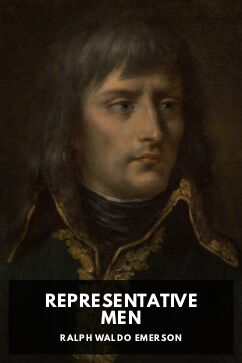
Representative Men - Ralph Waldo Emerson
Forget what you know about dry biography. Ralph Waldo Emerson's Representative Men is something else entirely. It's a series of seven essays, but it feels more like a guided conversation with a brilliant friend about what makes a person legendary.
The Story
There's no plot in the traditional sense. Instead, Emerson picks six men he sees as archetypes of human greatness: Plato (the Philosopher), Swedenborg (the Mystic), Montaigne (the Skeptic), Shakespeare (the Poet), Napoleon (the Man of the World), and Goethe (the Writer). He walks you through their ideas and lives, but he's not just listing facts. He's using each one as a lens. Through Plato, we examine the love of wisdom. Through Napoleon, we see raw power and its limits. He connects their specific genius to universal human traits, suggesting that their greatness is just an amplified version of qualities we all share.
Why You Should Read It
This book is a shot of intellectual adrenaline. Emerson’s core idea is incredibly empowering: great people aren't magical beings from another planet. They are 'representative' because they represent the heights that are possible for humanity, and therefore, for you. Reading it feels like getting permission to think bigger. His prose is dense and demands your attention—you'll want to read some paragraphs twice—but the payoff is huge. You'll start seeing the 'Plato' or the 'Shakespeare' in the people around you, and more importantly, in yourself. It reframes history from a list of events into a study of human potential.
Final Verdict
This is not a light beach read. It's for the curious thinker, the person who loves history but wants more than just dates and battles. It's perfect for anyone feeling stuck in a routine, as it challenges you to look for the extraordinary in the ordinary. If you enjoy authors like Seneca or modern writers who explore big ideas about self-reliance and human nature, you'll find a kindred spirit in Emerson. Give it your time, and it might just change how you see your own place in the world.
Legal analysis indicates this work is in the public domain. It is now common property for all to enjoy.
Charles Robinson
2 years agoBased on the summary, I decided to read it and the content flows smoothly from one chapter to the next. Worth every second.
Nancy Hernandez
7 months agoPerfect.
Sarah Allen
1 year agoFive stars!
David Nguyen
6 months agoGreat read!



Noah Thomas
2 years agoSimply put, the flow of the text seems very fluid. Highly recommended.