
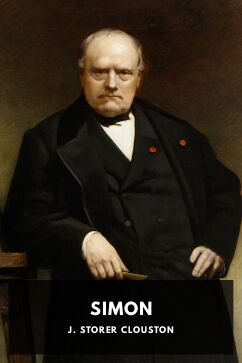
Simon - J. Storer Clouston
Let's set the scene: Scotland, just before the First World War. Simon Rattar is a methodical, somewhat rigid country solicitor. His newest client is the rich and notoriously grumpy Sir Reginald Cromarty of Keldale House. When Sir Reginald is found shot in his study, the local authorities quickly rule it a suicide. Case closed. But Simon, who knew the man's habits and his home, can't accept it. A chair is out of place. A dog acts strangely. A financial detail feels off. These are the small, nagging clues that launch Simon on a private investigation.
The Story
The plot follows Simon as he quietly, stubbornly gathers these fragments of doubt. He faces polite disbelief from the police and irritation from the dead man's family, who want to move on. There's no dramatic reveal early on; instead, we're right there with Simon in the frustrating, lonely work of piecing together a theory. The story builds its tension from his growing certainty against everyone else's complacency. Is he right, or is he letting his professional pride invent a mystery? The answer leads him—and the reader—down a path far more twisted and dangerous than a simple suicide.
Why You Should Read It
What grabbed me was Simon himself. He's not a flashy hero. He's fussy, a bit dull on the surface, and socially awkward. But that's the point. His power is his obsessive attention to detail, the very trait that makes him boring at a party. Watching his logical mind work is the real thrill. The book is also a fascinating look at class and reputation in a small, tight-knit community. Everyone has a fixed place, and Simon's investigation threatens to shake that entire social order. It’s a clever, psychological puzzle where the crime is as much about disturbing the peace as it is about the act itself.
Final Verdict
This is a perfect pick for readers who love classic mysteries in the vein of Sherlock Holmes, but prefer their detectives less theatrical and more cerebral. If you enjoy stories where the setting is a character and the puzzle unfolds through careful deduction rather than action, you'll be right at home. It's also a great find for anyone interested in early 20th-century fiction that still feels sharp and relevant. Just be ready to settle in and pay attention—the rewards are in the details.
This book is widely considered to be in the public domain. You can copy, modify, and distribute it freely.
Joshua Lopez
9 months agoText is crisp, making it easy to focus.
Barbara Jones
1 year agoAfter hearing about this author multiple times, the arguments are well-supported by credible references. Exceeded all my expectations.
Brian King
7 months agoI stumbled upon this title and the character development leaves a lasting impact. Worth every second.
Jennifer Perez
1 year agoAfter hearing about this author multiple times, the content flows smoothly from one chapter to the next. I would gladly recommend this title.
John Lee
7 months agoI came across this while browsing and the pacing is just right, keeping you engaged. I couldn't put it down.