
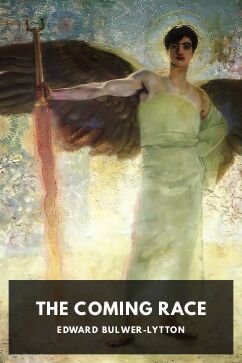
The Coming Race - Edward Bulwer-Lytton
Let me set the stage: it's 1871, and a nameless explorer is checking out a deep mine. Suddenly, the floor collapses, and he plummets into a massive cavern. He hasn't found hell or a monster's lair—he's stumbled into a vast, beautiful, and technologically advanced world hidden inside the Earth. The people who live there are the Vril-ya, a human-like race that evolved separately from us.
The Story
The narrator is rescued and slowly introduced to this society. Everything about the Vril-ya is designed to create perfect harmony. They have no war, poverty, or crime. Their secret? A fluid energy called Vril, which is a kind of all-purpose power source. With a simple staff, they can heal, destroy, build, and fly. It's the ultimate technology. As our hero learns their language and customs, he's amazed. But his wonder turns to unease. The Vril-ya view surface humans as a dangerous, backward species. They live by a simple, chilling logic: any race that poses a threat to the universal peace must be neutralized. The narrator's very presence is a threat. The central tension isn't about escaping a monster; it's about escaping a civilization that might see his entire species as a problem that needs to be permanently solved.
Why You Should Read It
This book is fascinating because it feels so ahead of its time. Bulwer-Lytton isn't just writing a hollow adventure; he's building a complex thought experiment. What does a 'perfect' society look like? The Vril-ya have no need for art, passion, or struggle—the very things that often define the human experience. Their peace feels sterile and a little frightening. The concept of Vril itself is brilliant. It's not just magic; it's a hyper-advanced science that makes their society possible, and it's also the source of their absolute power. You spend the whole book seeing this utopia, while feeling a knot of dread tighten in your stomach, waiting for the other shoe to drop.
Final Verdict
This is a must-read for fans of classic sci-fi and social speculation. If you love the big ideas in books by H.G. Wells or Jules Verne, you'll find their spiritual ancestor here. It's also perfect for anyone who enjoys a story where the real villain isn't a person, but an idea—the idea of 'progress' taken to a cold, logical extreme. The prose is from the 1800s, so it has a formal rhythm, but the story moves quickly and the ideas are sharp. Don't go in expecting laser battles; go in ready for a smart, eerie, and deeply imaginative look at a world that has everything, and what that everything might cost.
This publication is available for unrestricted use. Feel free to use it for personal or commercial purposes.
Karen Wright
1 year agoI came across this while browsing and the clarity of the writing makes this accessible. This story will stay with me.
Robert Hill
1 year agoHaving read this twice, the pacing is just right, keeping you engaged. A valuable addition to my collection.
Mary Lee
1 year agoSolid story.
Nancy Smith
4 months agoEssential reading for students of this field.








David Walker
1 year agoI stumbled upon this title and the pacing is just right, keeping you engaged. Absolutely essential reading.