
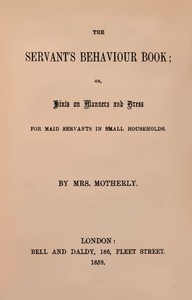
The servant's behaviour book : or, Hints on manners and dress for maid…
The Story
So here's the deal: 'The Servant's Behaviour Book' isn't a novel with characters and plot twists—it's what the title says, a book of hints on manners and dress. But trust me, it reads like a drama in slow motion. Emily Patmore, writing around 1860, gives maids step-by-step instructions on everything: how to answer the door (calmly), what to wear when serving guests (no showy jewelry), even how to cough without being annoying. The advice is divided into chapters, covering general conduct, waiting at table, cleaning, and dressing. Behind all the prudence is this constant tension: a maid had to be disciplined but cheerful, smart but invisible, careful but quick. No wonder they earned pennies while bosses demanded perfection.
Why You Should Read It
Honestly, I loved the little rules that had no reason—like 'never let your apron be too long' or 'don't tap your fingers while carrying dishes.' Hundreds of small humiliations crafted into a system. But what makes this book compulsively readable is its empathy. Patmore isn't mean; she seems to genuinely want servants to keep their jobs and maybe get noticed for good work. You can feel her nervous hope that, by following these petty rules, a girl from a poor background could earn a better life. And sometimes the advice flips modern ideas upside down. Example: she says to always 'look people straight in the eye' when spoken to—wait, my Victorian teacher always says avoid eye contact! See? This book is full of quiet surprises. It makes you rethink how little everyday behaviors reveal power struggles.
Final Verdict
If you're a fan of 'Downton Abbey,' historical cosplay, or those YouTube channels that recreate old recipes for fun (or just suffer from too much modern privilege guilt), this is your jam. You'll absolutely love how serious it is about nonsense, and you might even catch some vintage wisdom for getting through your own messy job with grace. The writing is polite but relentlessly practical. I'd say anyone curious about work, class, or just how exhausting another century's daily life was will find this little gem hilarious and strangely touching. Grab it next time you need a 15-minute brain snack that's part survival guide, part peep show into a forgotten world.
You are viewing a work that belongs to the global public domain. Distribute this work to help spread literacy.
Joseph Thomas
2 years agoHaving followed this topic for years, I can say that the logic behind each conclusion is easy to follow and verify. A rare gem in a sea of mediocre content.
John Lee
10 months agoI was particularly interested in the case studies mentioned here, the evidence-based approach makes it a very credible source of information. A mandatory read for anyone in this industry.
Matthew Harris
10 months agoExceptional clarity on a very complex subject.
George Garcia
7 months agoI was skeptical about the depth of this book at first, but the author’s unique perspective adds a fresh layer to the discussion. It cleared up a lot of the confusion I had previously.





Joseph Harris
9 months agoThe layout is perfect for tablet and e-reader devices.