
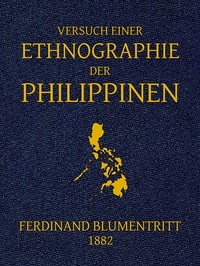
Versuch einer Ethnographie der Philippinen by Ferdinand Blumentritt
This isn't a novel with a plot, but the story of its creation is compelling. In the late 1800s, Austrian teacher and ethnographer Ferdinand Blumentritt developed a deep fascination with the Philippines. Without the means to travel there himself, he built his expertise through a vast network of correspondence with people on the ground—from Spanish officials and missionaries to, most famously, the national hero José Rizal. He pieced together maps, studied languages, and analyzed customs from this flood of second-hand information. The book itself is his systematic attempt to organize and present everything he learned about the archipelago's diverse ethnic groups, their traditions, and social structures.
Why You Should Read It
You should read it for the sheer audacity of the project. It makes you think hard about how we understand other cultures. Blumentritt was an outsider trying to be an insider, armed only with paper and pen. His work is a mix of sharp insight and the unavoidable biases of his time and sources. Reading it, you feel the excitement of discovery but also the distance. His close friendship with Rizal, who fiercely criticized Spanish rule, adds a powerful layer, showing how academic study and the fight for independence became intertwined.
Final Verdict
Perfect for history buffs and anyone curious about the strange ways knowledge travels. It’s not a light read—it’s a dense, scholarly work—but it offers a unique window into both the Philippines before modern globalization and the mind of a dedicated researcher working against all geographical odds. If you like stories about obsessive intellectuals or the history of how the West tried to catalog the world, this is a foundational and strangely human text.
This work has been identified as being free of known copyright restrictions. It serves as a testament to our shared literary heritage.
Oliver Clark
1 year agoWithout a doubt, the arguments are well-supported by credible references. Don't hesitate to start reading.
Richard Taylor
2 years agoHonestly, the flow of the text seems very fluid. Exceeded all my expectations.
Ethan Lee
7 months agoSurprisingly enough, the pacing is just right, keeping you engaged. I will read more from this author.
John Wilson
1 year agoThis book was worth my time since the storytelling feels authentic and emotionally grounded. A true masterpiece.





Mary King
1 year agoI stumbled upon this title and the emotional weight of the story is balanced perfectly. Worth every second.