1

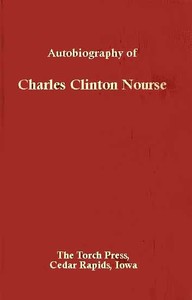
Autobiography of Charles Clinton Nourse Prepared for use of Members of the Family — Context and Discussion
(0 User reviews)
68
Project Gutenberg
2012
Not confirmed
Lawyers -- Iowa -- Biography; Iowa -- Politics and government; Nourse, Charles Clinton, 1829-
Readers of public-domain and historical texts
Project Gutenberg digital edition
en
Edition facts
Words
87,359
Reading time
380 min
Text sections
9
The catalog record for Autobiography of Charles Clinton Nourse Prepared for use of Members of the Family — Context and Discussion provides practical reading context through 87,359 words, 6 hr 20 min estimated reading time, and 9 detected text sections.
The text analysis averages about 29.1 words per sentence, while the detected sections provide another way to judge how the source is divided.
Project Gutenberg metadata also associates the work with “Lawyers -- Iowa -- Biography,” connecting these edition facts with the source record’s subject description.
Source:
Project Gutenberg record #40777
Charles Clinton Nourse's autobiography, written as a letter to his grandson, blends personal memoir with detailed accounts of Iowa legal and political history, focusing on prohibition debates and his fifty-year law practice.
Read the complete public-domain text at its original source.
Read on Project GutenbergCharles Clinton Nourse frames his autobiography as a long letter to his grandson, Joseph Chamberlain, written in 1908 from Des Moines. The work is explicitly intended for family perusal, not publication, which shapes its intimate, anecdotal tone. Nourse opens with his birth in 1829 in Sharpsburg, Maryland, near Antietam Creek, grounding the narrative in precise geography and family history. The text quickly moves from ancestry to his legal career in Iowa, where the voice shifts from personal recollection to detailed argumentation, especially on prohibition and railroad regulation.
A Letter to a Grandson as Narrative Frame
The autobiography’s epistolary opening—addressed to “Master Joseph Chamberlain”—establishes a direct, informal voice. Nourse writes as if speaking to a young relative, using phrases like “Dear Joe” and promising “something of a biography of myself.” This frame allows him to mix personal incidents with legal analysis without formal structure. The intended audience of family members explains the inclusion of genealogical details, such as the stone house in Sharpsburg and references to the book James Nourse and his Descendants. The tone is conversational yet precise, with Nourse assuming his reader’s interest in both family lore and the mechanics of Iowa law.
Shifts in Pace: From Personal Anecdote to Legal Argument
Nourse’s narrative pace varies markedly between sections. Early chapters move quickly through childhood and early Iowa experiences, with brief, episodic sentences. In contrast, later chapters on prohibition and railroad tariffs slow to a deliberative, almost polemical pace. For instance, in discussing the 1882 Iowa State Register editorial on the amendment’s meaning, Nourse reproduces the full text and then dissects it clause by clause. He notes that the committee “was composed of lawyers who fully understood” the limits of state police power, contrasting their realism with the “Utopian idea” of controlling liquor use in other states. This shift from storytelling to legal reasoning reflects Nourse’s dual identity as memoirist and practicing attorney.
Recurring Details: Place, Law, and the Limits of Memory
Specific places anchor Nourse’s narrative: Sharpsburg, Maryland; Des Moines, Iowa; the Antietam battlefield. These locations are not merely settings but markers of personal and historical significance. Legal documents—such as “house file No. 516½” and “chapter 143 of the acts of the twentieth general assembly”—appear with exact citations, suggesting Nourse’s reliance on written records. Yet the autobiography also acknowledges memory’s gaps: Nourse writes “I can say that there was at no time any thought” by the majority, a phrase that implies he is reconstructing past intentions. This tension between documentary precision and personal recollection gives the text its distinctive texture.
Readers should approach this autobiography as a hybrid document: part family letter, part legal brief. Nourse’s voice shifts between grandfatherly reminiscence and lawyerly argument, and the pace varies accordingly. Pay attention to the quoted newspaper editorials and legislative texts, which Nourse uses as evidence for his own positions. The work rewards those interested in Iowa political history, prohibition debates, and the self-fashioning of a 19th-century lawyer who saw his life as a series of cases to be argued.
Reading Charles’s account of his long law practice, I remembered sitting with my grandfather’s own dusty ledgers. He, too, wrote everything down. That feeling returned with A brief summary in plain language of the most important laws concerning women — Text and Context, which felt less like a history and more like a quiet, deliberate act of preservation—someone making sure the forgotten rules of daily life were not lost entirely.
There are no reviews for this eBook.
There are no comments for this eBook.
Reader reflection
Record your reading impressions
A brief reflection can help important ideas stay with you longer.
Your progress
0
/
10
2
What was your overall reaction to the book?
3
How likely are you to recommend this book?
4
How much effort did this book require?
5
Did the story or argument move comfortably?
6
Which part made the strongest impression?
7
How well did it match your expectations?
8
Did it raise ideas you would like to talk about?
9
What changed or sharpened your thinking?
10